
The Rational Person Would Quit: Steve Jobs on the Startup Reality
Steve Jobs was often asked what distinguished successful entrepreneurs from those who failed. His answer was rarely about intelligence or capital; it was about
‘perseverance driven by an irrational love for the work.’
A CoachPreneur is no different! We become so obsessed with being a good coach that we completely overlook the business aspect. A neophyte mindset (a term I recall from Barron’s GMAT guide). You’re so captivated by the power of the coaching process that you forget you’re also an entrepreneur, not just a coach!
Of course, then we become enamoured with other methodologies and drift away from the core of coaching, to effectively serve (win-win). It is often a downward spiral.
Many cite a lack of exposure to sales, marketing, or P&L responsibilities as an excuse. However, we handle all these naturally, always, both personally and professionally.
Conscious Capitalism: The real ‘business’ is #PlanetPeopleProfit, whether you’re an entrepreneur or intrapreneur. All corporate leaders, regardless of their roles, are intrapreneurs. You can’t succeed without entrepreneurial skills, and these can be learned like any other skill as long as we remain open to learning.
All learning begins with humility and hard work.
1. The Passion Filter. In a 1995 interview, Jobs explained that starting a company is so gruelling that any sane person would simply give up.
‘You have to have a lot of passion for what you’re doing… because it’s so hard that if you don’t, any rational person would give up. It happens over a sustained period of time. So if you don’t love it, if you’re not having fun doing it, you’re going to give up. And that’s what happens to most people, actually.’
(#DYK the origin of passion goes to the crucifixion?)
2. The Resilience of Connecting the Dots. Jobs believed that during the hardest moments—like when he was fired from Apple in 1985—you cannot see the purpose of the struggle while you are in it. In his 2005 Stanford speech, he noted:
- Hindsight is the only clarity: ‘You can’t connect the dots looking forward; you can only connect them looking backwards.’
- Trust as a Tool: ‘You must trust that the dots (failures, late nights, setbacks) will eventually lead somewhere meaningful. This trust gives you the confidence to follow your heart, even when it takes you off the well-worn path.’
Trust the coach, trust the coachee or client, and trust the process — as we say in coaching. And trust is a coaching competency (ICF CC #4), although ‘intimacy’ has been replaced with ‘safety’.
As a coach, mentor, and healer, an entrepreneur… Mindset is everything.
3. Precision in Execution (The Sandbox Rule): Beyond mindset, Jobs emphasises a relentless focus on action.
Act Like a Leader, Think Like a Leader – a Book by Herminia Ibarra
Jobs famously argued that while ideas are a start, the process of transforming an idea into a product is where true value is created.
- Hiring is Everything: He regarded hiring as chess, not checkers, believing that a small team of A-players could outperform large corporations. Jim Collins and Richard Branson highlight the importance of hiring.
- Simplification: He believed that simplicity can be harder than complexity, but once your thinking is clear, you can move mountains. ‘Simplicity is the ultimate sophistication’
Let’s not forget “Only the paranoid survive” – Andy Grove.
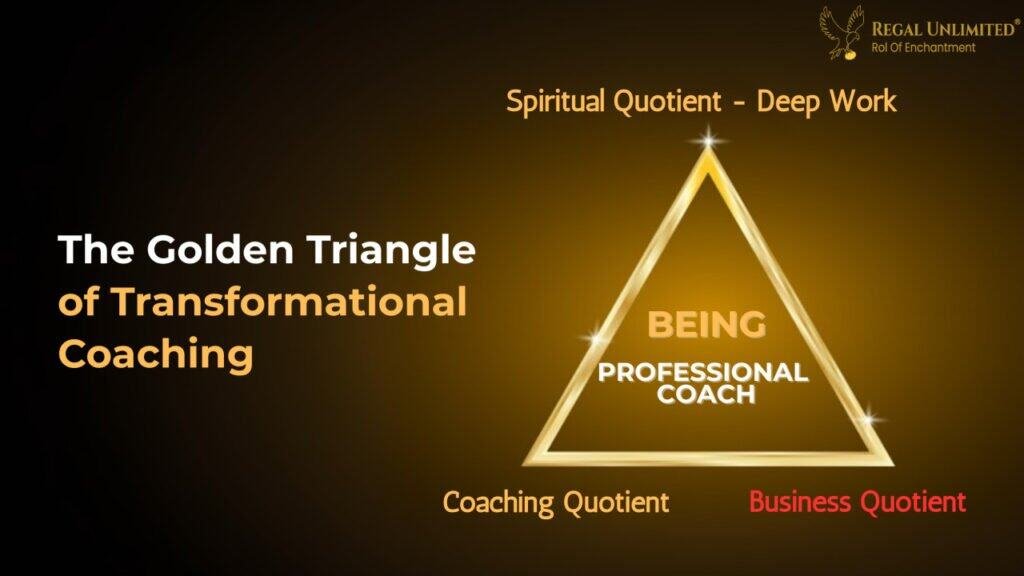
It helps to reflect on why we chose to become a coach – whether internal to an organisation or as a coachpreneur. That ‘why‘ is our eternal north star, our life purpose. To succeed, all three elements matter – coaching quotient, business quotient, and spiritual quotient. You need to attract the right prospects and clients. Otherwise, we will not reach our full potential as coaches.
Then, success is holistic and enduring as a coach. And our coaching is transformational.